Resources for Bike Riders
Keeping safe on our roads and shared paths
Riding a bike is a much safer activity than many people think. But it is still your responsibility to ensure that you know and understand the road rules and ride in a safe and responsible manner.
For more information for keeping safe on roads, cycleways and shared paths we strongly recommend that you read the Safety and Education page.
Getting started
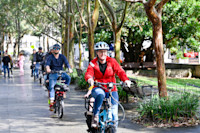
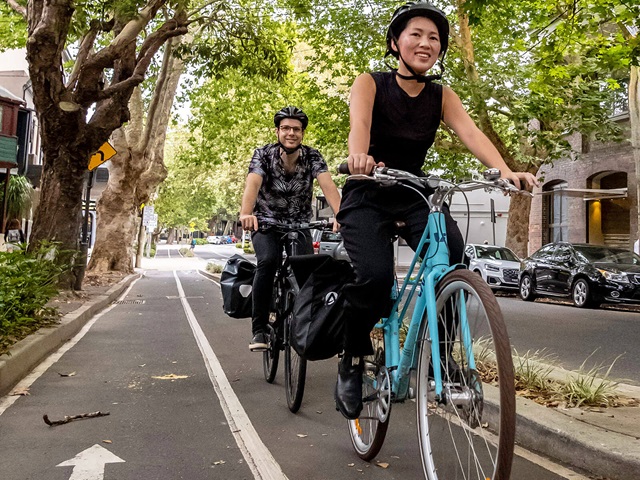
If you're reading this, then chances are you already ride a bike or are considering riding. You have made a great choice - riding is a fun, healthy and sustainable way of getting around the city.
If you ARE already a bike rider then you’ll know the sense of freedom and fun that it brings
If you are THINKING about riding, then you may not know where to begin. On this page, we’ll cover some of the basics as well as pointing you in the right direction if you feel you need a little more help.
Choosing a bike
If you don't already have a bike, one of the most confusing things may be simply figuring out what kind of bike to get.
A good way to start is to consider what kind of riding you are going to do and then to visit one or more good bike shops to discuss your needs.
A good retailer will most likely get you to try several models for size, take measurements and make adjustments until they think you are ready for a short test ride near the shop.
Don't forget that getting a bike that 'fits' properly is as important as getting the right type of bike for you.
Setting up my bike
Leave room in your budget for accessories – some are required by law and some just make good sense.
Required by Law:
- an approved helmet must be worn at all times when riding a bike. This applies to all riders regardless of age.
- front and rear lights must be fitted and in use if riding at night. Your bike must also have a red rear reflector.
- a bell or horn (warning device) must be fitted within easy reach and in working order.
Other useful accessories:
- A luggage rack and panniers (saddle bags) - invaluable for regular commuters;
- Reflective clothing for added visibility;
- A good bike lock;
- A trip computer will allow you to track your progress and fitness gains.
Free cycling courses
Whether you ride regularly or are just starting out, the City of Sydney offers FREE cycling courses run by trained instructors to help you get the most out of bike riding.
Bike Maintenance for Beginners
Learn the basics of bicycle maintenance and repair. This course covers topics such as adjusting your bike, fitting and removing tyres and tubes, and repairing punctures.
'Cycling in the City' Confidence
Learn responsible and low-risk riding techniques. Open to people over 18 who can already ride but want to build their traffic skills and confidence.
Get insured!
Whether you ride for fun, fitness, or transport it makes sense to get insured. It’s unlikely, but accidents do happen so it’s best to be covered in advance.
Why should I get insured?
- Public Liability - if you are involved in an accident you will be covered for any damages or injuries you cause
- Personal Accident Insurance - some policies will cover loss of income if you can’t work after an accident, and may pay for non-Medicare medical expenses.
- Bicycle Theft Insurance - Protect your bike against theft, loss and damage.
How do I get insured?
Your best option is to join a peak cycling body, such as Bicycle NSW, that automatically provides insurance cover for its members.
If you already have an existing Home and Contents Insurance policy you may already be covered to some degree. Talk to your insurance company for more on what your policy covers and what might need to be added.
Bicycle user groups
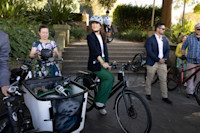
Bicycle User Groups (BUGs) support a bicycle-friendly culture and have a wealth of knowledge to share. By contacting your local BUG you can find out more on local rides, bike lessons, bike buddy programs, cycling events and membership.
Find your nearest Bike User Group
Ride the bike bus
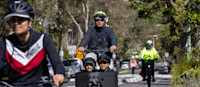
A bike bus is a group of people who ride to work together.
It's called a "bus" because there is a set route and timetable.
For more information contact your local Bicycle User Group or visit: www.bikebus.org.au
Maps and bike routes
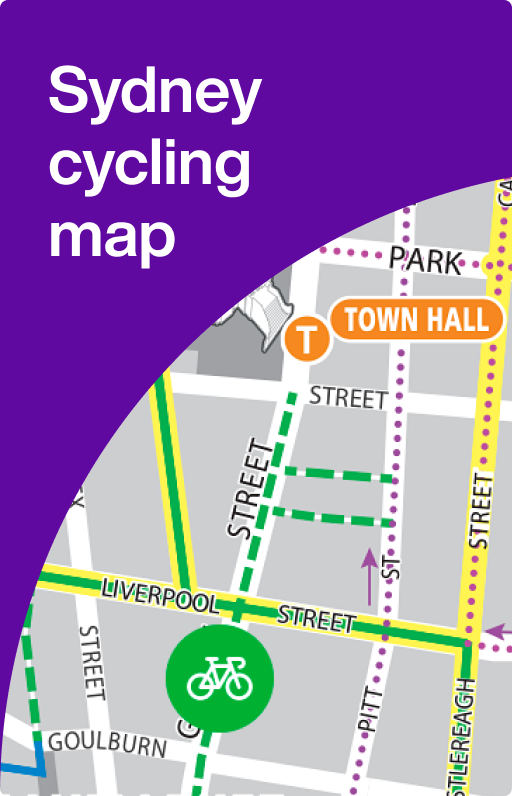
Whether you are riding to work or to the cinema, choosing the right route is one of the most important things to improve your safety and comfort. Fortunately, there are a number of maps and information sources available on our Cycling Maps and Routes page to help you pick the right route every time.
Bike parking
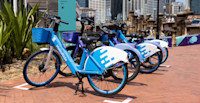
There's no point getting where you’re going if you can’t safely park your bicycle. Our Bike Parking page will give you more information on where to park your bike in the city.
Riding to work
Some 1.35 million Australians make car journeys to work of less than 5 kilometres. That’s the equivalent of a 15 minute bike ride.
A recent study of 7000 Australians showed that people who drive to work are 13 per cent more likely to be overweight or obese. Hop on a bike and avoid the peak hour crush, get fit, feel great and meet new people.
Tips for riding to work:
- Plan your route using our Live Green Cycling Map.
- Use panniers or a basket to carry your gear.
- Ride on a weekend or during off-peak traffic first to familiarise yourself with the route.
- Start one or two days a week and then ride more often as your confidence and fitness improves.
- Consider doing the City of Sydney’s FREE Cycling in the City course.
- Speak to your HR department if your work doesn’t already have bike parking and shower facilities.
If you’re interested in riding to work and not sure where to start, have a look at:
- The Road and Traffic Authority's Cycling to Work brochure
- The 10 most frequently asked questions about riding to work
- Bicycle NSW’s Ride2Work program and also Gear Up Girl
- This year’s National Ride to Work Day
- Bike buses - a bike bus is a group of people who cycle to work in a group with a set route and timetable, picking up "passengers" along the way.
Riding with kids
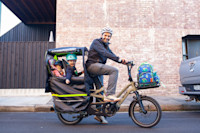
Bikes represent fun, freedom, exercise and fresh air – everything that is special about being a child. As a parent you can encourage your children to be active by riding with them.
Riding with very young children
If your child is old enough to sit upright unattended and hold their head up while wearing a helmet you could consider a bike seat or trailer. For more information on these visit your local bike shop.
Riding with older children
The best way to ensure your child rides safely is to ride with them regularly. Children under 12 are allowed to ride on footpaths, and in NSW an adult can legally ride on any footpath when accompanying a child under 12.
When Walking
- Be Aware
Look both ways when crossing a cycleway, and do not walk along the cycleway. - Be Predictable
Bicycles can move very quietly, keep to one side on shared paths. - Use Crossings
Always use a pedestrian crossing when available: otherwise give way to bicycles on the cycleway.
When Cycling
- Be Sensible
Ride safely and travel at a speed that will allow you to stop safely. On a cycleway keep to the left and ride in your lane. - Be Considerate
Watch out for pedestrians and be prepared to stop suddenly. - Use your Bell
Always give way to pedestrians and use your bell early to alert people to your presence - bicycle riders are legally required to have a bell. - Be Car Aware
Watch for tuning vehicles especially at intersections and driveways.
When Driving
- Be Aware
Slow down and watch for bicycles when crossing a cycleway especially when entering or leaving a driveway. - Follow The Rules
Obey the road signs and stay within lane markings. Do not park on or block a cycleway. - Give Way
Give way to bicycles and pedestrians when entering or leaving a driveway, and at bicycle and pedestrian crossings
Changed Driving Conditions
Please be aware of the changed traffic conditions - particularly on Bourke Road. The City has implemented a range of measures including changed lane markings and the installation of speed cushions to reduce vehicle speeds on these local roads.
Features of These Cycleways
The Bourke Road, Mandible and Bowden Street cycleways include some road features that you may not have encountered before:
Shared Paths at Intersections
At the intersections of Bourke Road and Huntley, Collins and Wyndham Streets, the separated cycleways have a transition to shared paths. Bike riders will share these footpaths and intersections with pedestrians.
These shared paths are identified by the image of a "pedestrian and a bike" painted on the pavement or on a street sign. Pedestrians always have priority on shared paths.
Bike riders must slow down and give way to pedestrians. They should also maintain a safe distance from pedestrians and notify them of their approach by ringing their bell.
New bus stops
You will notice some new bus stops along Bourke Road, located on 'bus islands'. Pedestrian crossings give access across the cycleway from the footpath to the bus stop.
Bike riders must give way to people crossing at these bus island pedestrian crossings.
Last Updated: Monday 23 May, 2011